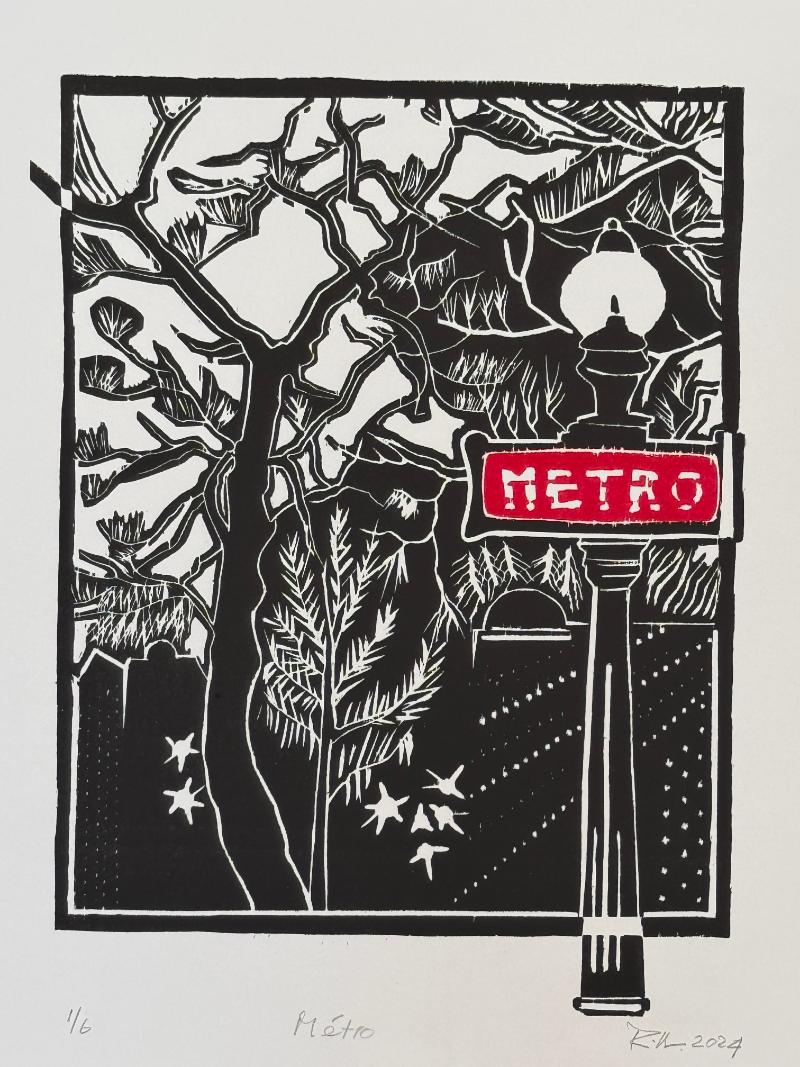
Métro 1 von 6, 2024, Holzschnitt, 29 x 22.2 cm
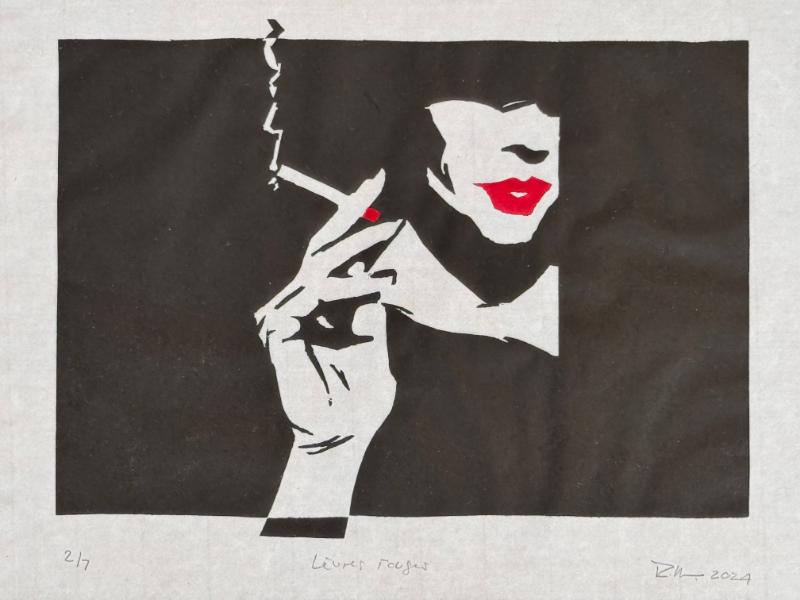
Lèvres rouges 2 von 7, 2024, Holzschnitt auf Japanpapier, 28.5 x 21.5 cm
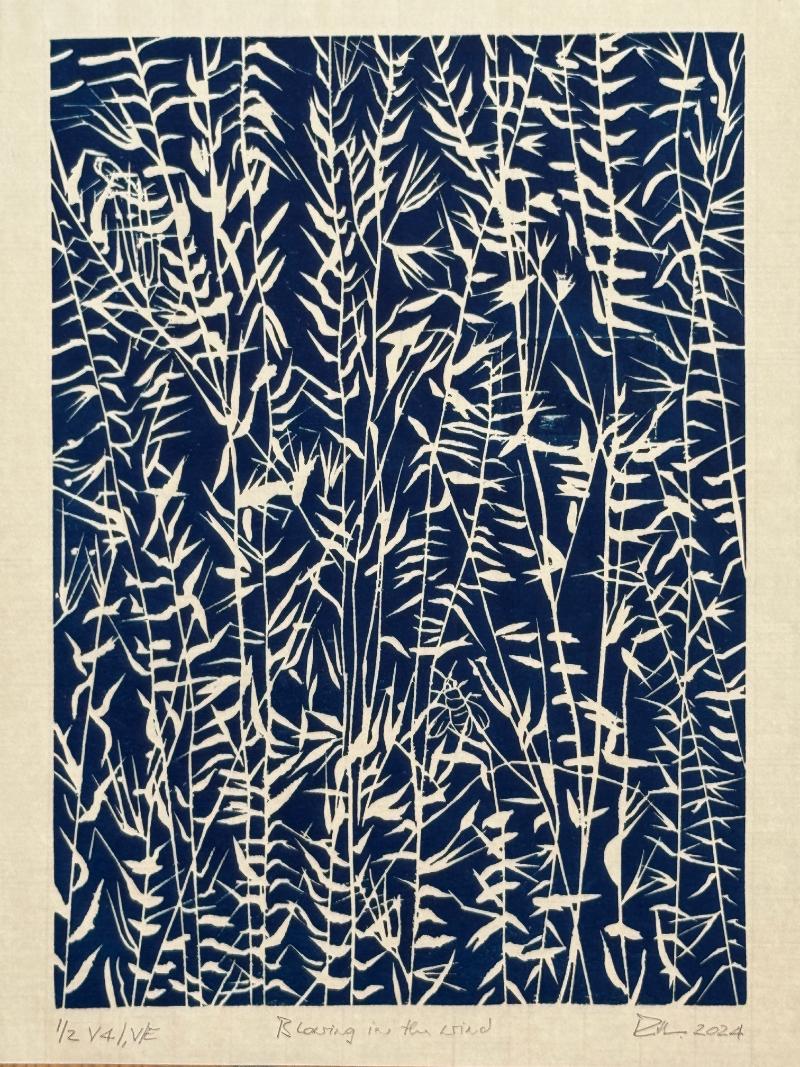
Blowing in the wind (with bee) 1 von 2, 2024, Holzschnitt auf Japanpapier, 31.5 x 22.5 cm
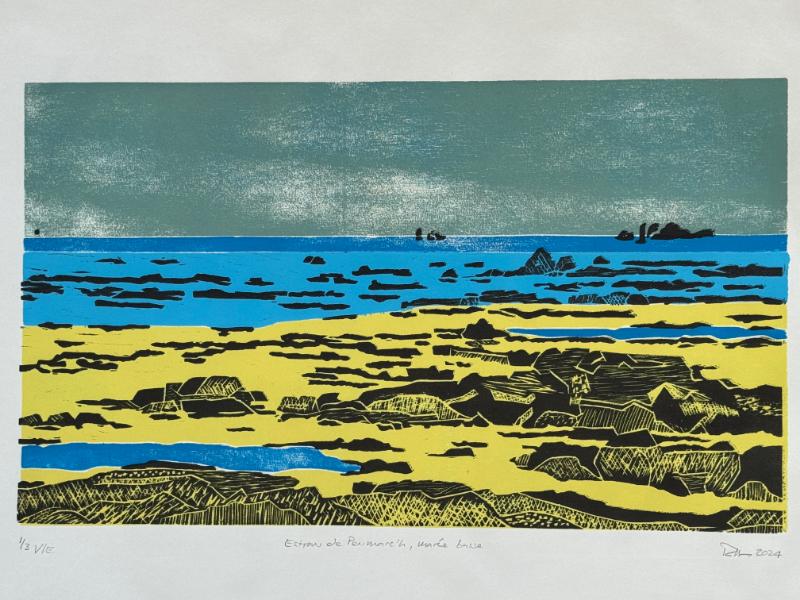
Estran de Penmarc'h, marée basse 1 von 3, 2024, Holzschnitt, bestehend aus 6 Einzelteilen, 49.5 x 28.9 cm
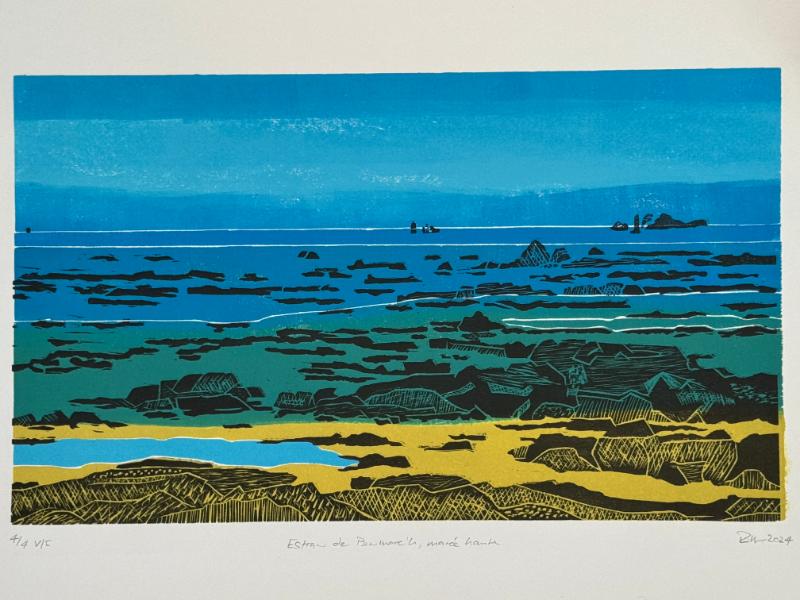
Estran de Penmarc'h, marée haute 4 von 4, 2024, Holzschnitt, bestehend aus 6 Einzelteilen, 49.5 x 28.9 cm
Geboren in Basel am 22. Juni 1944
Verheiratet mit Engländerin, 3 erwachsene Kinder
Schulen in Basel und im Engadin
Studium in Genf an der HEPIA, Haute école
du paysage, d’ingénierie et d’architecture
1966 Ausbildung zum Berufspiloten in Denver, Colorado USA
Pilot bei United Airlines & Königlicher Flug Saudi-Arabien
1981 Genick gebrochen, Unfall auf Fussgängerstreifen
1984 - 1997 Apple Computer, Cupertino & Europa
1998 - 2001 Partner in Internet Provider Firmen
2001 - 2003 Novartis Pharma, Head Welcome Services
2004 Frühpensionierung
Sprachen: Deutsch, Englisch, Französisch
2016 Woodcut course with Rod Nelson, member of the Royal Society of Painter-Printmakers, member of Pine Feroda, co-author of several books on wood work and engraving.
The first woodcut I made in Rod's course shows a scene in the harbour of Loctudy in Brittany. It is a multicolour plate in which I cut out parts so as to colour them differently and print them in multiple colours in one go.
The idea for the print ‘Blowing in the Wind’ was born when my wife and I were cycling home from the beach. Tall, dry grasses swayed in the wind. We held up a blue beach towel, took a photo and went home to transfer the impression onto the wood. Later, I added a bee.
The picture ‘Métro’ was created after a visit to the Musée d'Orsay. The exhibition was dedicated to René Lalique and other artists of the Art Nouveau movement. The Métro was inaugurated on 19 July 1900 and its lettering was designed especially for it by its architect, Hector Guimard.
‘Lèvres rouges’ was inspired by a fashion magazine, and several buyers tell me that it is a print that generates interesting conversations and revives memories.
As I spend a lot of time in Brittany and have sailed extensively, I have a close connection with the sea. Our neighbour in Loctudy is a retired fisherman, shipowner and captain. When we chat on the beach, he knows every beacon and can name many of the rocks and buoys. These conversations inspired my two prints depicting the ebb and flow of the tide in Penmarc'h. «Estran de Penmarc'h, marée haute» and «Estran de Penmarc'h, marée basse». L'Estran represents the sand or mud flats on the shore, from the high-water mark to the low-water mark, an area that is flooded or dry depending on the tide. It is a fascinating, extremely lively area with many different types of algae and an abundance of creatures. In order to reproduce this area, the rock formations, pools of water and navigational aids in all their many facets and colours, I cut the print into six individual pieces so that I could colour them individually and print in multiple colours in a single go printing process. Edvard Munch also used the multi-block technique in some of his engravings.

